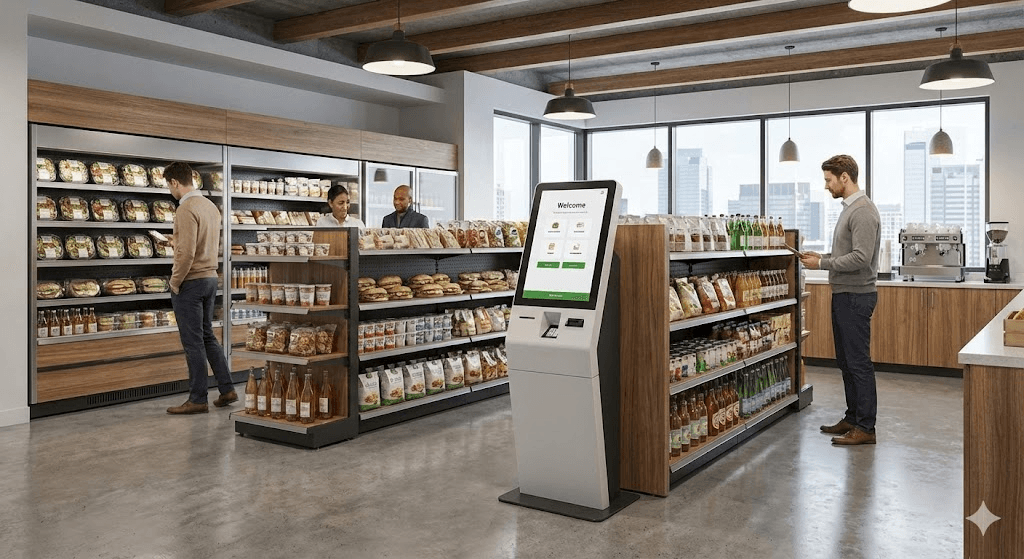
The Benefits of Cashless Vending
Why modern workplaces are switching to cashless payment systems for their breakrooms.
The Shift to Contactless Payments
In the post-pandemic world, cash is no longer king. It's barely even a prince. Consumers have grown accustomed to the speed, hygiene, and sheer convenience of contactless payments in every aspect of their lives—from tapping their phone at a subway turnstile to paying for groceries with a smartwatch. The office breakroom is one of the last bastions of the "cash-only" economy, but that is changing rapidly. Modern workplaces are upgrading to cashless vending systems at an unprecedented rate to meet employee expectations and streamline operations.
A study by the Federal Reserve found that cash usage for small transactions (under $25) has dropped by over 40% in the last five years. For a vending machine operator or an office manager, this statistic is a wake-up call: if your machines only accept cash, you are effectively turning away nearly half of your potential customers.
1. Understand the Technology Stack
Before you commit to an upgrade, it is crucial to understand that "cashless" is an umbrella term that covers a suite of sophisticated technologies. It is not just about bolting a credit card reader onto an old machine. The modern cashless ecosystem involves three distinct layers:
NFC and EMV Readers
At the physical layer, you have the card reader itself. Modern readers use Near Field Communication (NFC) to enable "tap-to-pay" functionality. This is what allows an employee to pay by simply hovering their iPhone, Android device, or contactless credit card near the terminal. They also support EMV (Europay, Mastercard, and Visa) chip technology, which is the global standard for secure credit card transactions. Unlike the old magnetic swipe readers, which were prone to wear and tear and security risks, EMV readers are durable and encrypted.
Mobile Wallets and Apps
The second layer is the software on the user's device. Mobile wallets like Apple Pay, Google Wallet, and Samsung Pay tokenise the user's credit card information, meaning the actual card number is never transmitted to the machine. This adds a layer of security that makes users feel safe. Beyond these universal wallets, many vending operators are launching proprietary apps. These apps allow users to load a balance, earn loyalty points (e.g., "Buy 10 coffees, get 1 free"), and even send gift credits to colleagues. This gamification can significantly boost engagement and repeat usage.
Telemetry and VMS
The third and perhaps most important layer is invisible to the user: Telemetry. This is the cellular or Wi-Fi connection that links the machine to the cloud. It transmits sales data in real-time to a Vending Management System (VMS). For the operator, this means knowing exactly how many Snickers bars are left in row E4 without ever stepping foot in the building. For the office manager, it means the machine is rarely out of stock because the restocking truck is dispatched only when needed.
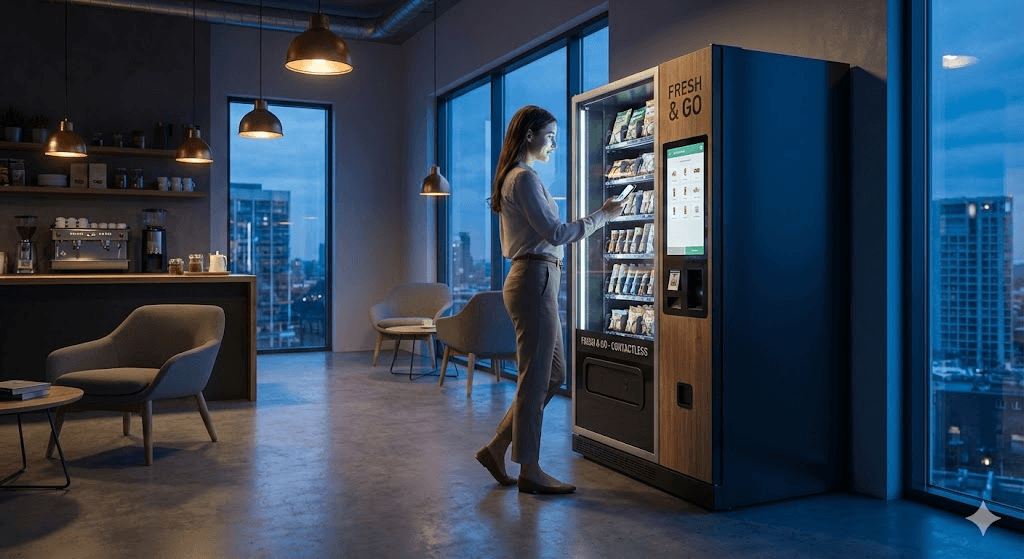
Modern card readers support NFC and mobile wallets.
2. Analyze the Financial Impact (ROI)
Upgrading to cashless technology involves an upfront investment, but the Return on Investment (ROI) is typically realized within 6 to 12 months. Let's break down the economics.
The Costs
The hardware itself—the card reader and telemetry device—typically costs between $250 and $400 per machine. Installation is usually straightforward and can be done in under an hour. On an ongoing basis, you will pay a monthly connection fee for the cellular data (usually around $10-$15/month) and a transaction fee to the payment processor (typically 5-6% of each sale). While these fees might seem high compared to a cash deposit, they are dwarfed by the revenue gains.
The Revenue Gains
Data from major payment processors like USA Technologies and Nayax consistently shows that adding a cashless reader increases total machine sales by 25% to 35%. There are two main drivers for this:
- Capture Rate: You capture sales from people who simply don't have cash. In a modern office, this can be upwards of 60% of the population.
- Average Ticket Size: This is the psychological factor. When paying with cash, a user is limited to the coins in their pocket. If they have $1.50, they buy one item. When paying with a card, that limitation disappears. Users are far more likely to buy a drink and a snack, or upgrade to a premium item. The average cashless transaction is often 40% higher than a cash transaction.
3. Enhance the Employee Experience
Beyond the financials, a cashless system is a massive quality-of-life upgrade for your team. It removes friction from their day. No one wants to walk down three flights of stairs to the breakroom only to realize they don't have four quarters for a soda.
Speed and Hygiene
A contactless transaction takes about 2 seconds. A cash transaction—fumbling for coins, uncrumpling a bill, waiting for the machine to spit it back out, trying again—can take 30 seconds or more. In a busy breakroom, that speed matters. Furthermore, in a health-conscious world, minimizing touchpoints is a priority. Cash is notoriously dirty; a contactless payment requires no physical contact with the payment terminal at all.
Loyalty and Perks
Smart vending systems allow employers to subsidize purchases. You can issue digital coupons or "allowances" to employees' accounts. For example, you could give every employee a $5 weekly credit for healthy snacks. This turns the vending machine from a utility into a tangible employee perk.
Cashless systems improve speed and convenience for employees.
4. Address Security and Privacy Concerns
Security is a valid concern for any connected device. However, the vending industry adheres to strict standards.
- PCI Compliance: All reputable card reader manufacturers (Nayax, Cantaloupe, etc.) are PCI-DSS compliant. This means they meet the rigorous security standards set by the major credit card companies.
- End-to-End Encryption: Data is encrypted the moment the card is tapped. The vending machine itself does not store card numbers. Even if someone were to break into the machine, they would find no usable data.
- GDPR and CCPA: For systems that use mobile apps and collect user data, compliance with data privacy laws is standard. Users have control over their data and can opt-out of marketing tracking.
5. Choose the Right Provider
The market is dominated by a few key players, each with their own strengths. When selecting a provider, consider hardware durability, dashboard usability, and customer support.
- Nayax: Known for their sleek, yellow card readers and robust global support. Their "Onyx" reader is a touch-screen device that looks very modern.
- Cantaloupe (formerly USA Technologies): A major player in the US market. Their "ePort" series is ubiquitous and extremely reliable.
- Crane Payment Innovations (CPI): Offers integrated solutions where the screen and payment terminal are one unit.
Frequently Asked Questions (FAQs)
Do cashless machines still accept cash?
Yes. The vast majority of upgraded machines are "hybrid." They retain the bill validator and coin mech for those who prefer cash, while adding the card reader bezel for cashless users. Removing cash entirely is an option, but usually only recommended for specific environments like high-security offices or hospitals.
What happens if the internet goes down?
Most modern readers have an "offline mode." They can store a certain number of transactions locally and upload them to the cloud once the connection is restored. This ensures that sales can continue even during a temporary network outage.
Can I retrofit my old machine?
In most cases, yes. If your machine was built in the last 15-20 years and supports the MDB (Multi-Drop Bus) standard, it can likely be upgraded with a simple plug-and-play kit. Older "dumb" machines might require a control board upgrade or replacement.
Who pays the transaction fees?
This is a point of negotiation. Typically, the vending operator absorbs the transaction fees as a cost of doing business, knowing that the increased sales volume will make up for it. However, some operators implement a "two-tier pricing" model where the cash price is lower than the credit price (e.g., $1.50 cash vs. $1.60 credit) to pass the fee to the consumer. In an office setting, absorbing the fee is generally recommended to avoid annoying employees.